
Mendoza and its valleys

How to choose a wine tour?
The real map of wine in Mendoza
- The differences between regions, landscapes and rhythms
- How to choose wisely and without rushing
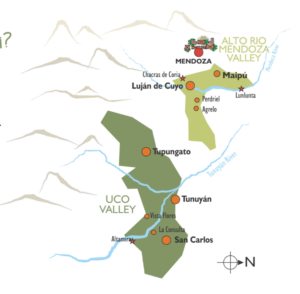
Mendoza is more than just one thing. Before discussing wine tours, it’s helpful to understand the map : the landscapes, distances, and history explain the experience much better than any list of wineries. Simply put, Mendoza is organized around its rivers and valleys , which give rise to areas with very distinct identities.
North of the Mendoza River
Historic and nearby Mendoza
North of the Mendoza River are the areas closest to the city and our estate.
Modern Mendoza winemaking took root here, primarily from the late 19th and early 20th centuries.
Maipú
The origin: trains, wineries and modern winemaking
Maipú is one of Mendoza’s oldest wine-producing regions within the modern development of the industry. Many of the first wineries were established here for a very specific reason: its proximity to the railway, which allowed wine to be shipped to Buenos Aires. As a
result , Maipú boasts historic wineries, traditional buildings, and an identity deeply connected to the origins of the wine industry. Today, it is a more urbanized area, integrated into the city’s growth. The Andes Mountains are perceived quite uniformly throughout the region: it is not a region defined by landscape, but rather by history, architecture, and urban structure .
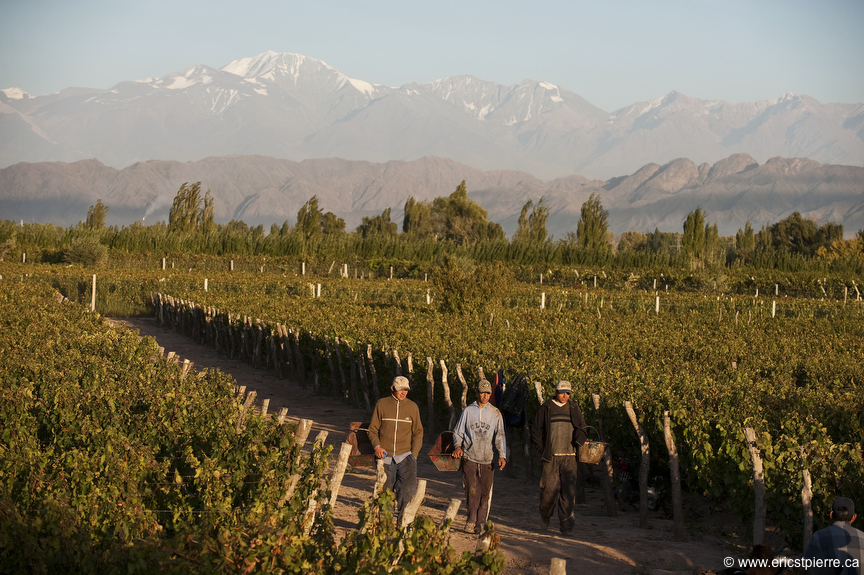
Luján de Cuyo
The natural shift of viticulture.
As time passed and the city grew, winemaking began to shift from Maipú towards Luján de Cuyo . First it followed the main roads , and then it sought areas with more space, better views and new development possibilities.
The old Route 40
In Luján, the old Route 40 represents an intermediate stage of this shift. The landscape here is characterized by traditional urbanization, old houses, and large groves of trees that form veritable tunnels, a very Mendoza-like feature. Wineries and vineyards blend into this urban-wooded environment. The Andes are ever-present, though often perceived through trees, gardens, and buildings, more as a constant presence than an open vista.
Vistalba and Las Compuertas
Further west, within Luján de Cuyo, lie Vistalba and Las Compuertas. These areas mark a new stage in development: more vineyards, less urban density, more space, and a clearer appreciation of the landscape and the mountains. Here more contemporary wineries begin to appear, though still in keeping with Luján’s traditional scale.
Perdriel and Agrelo
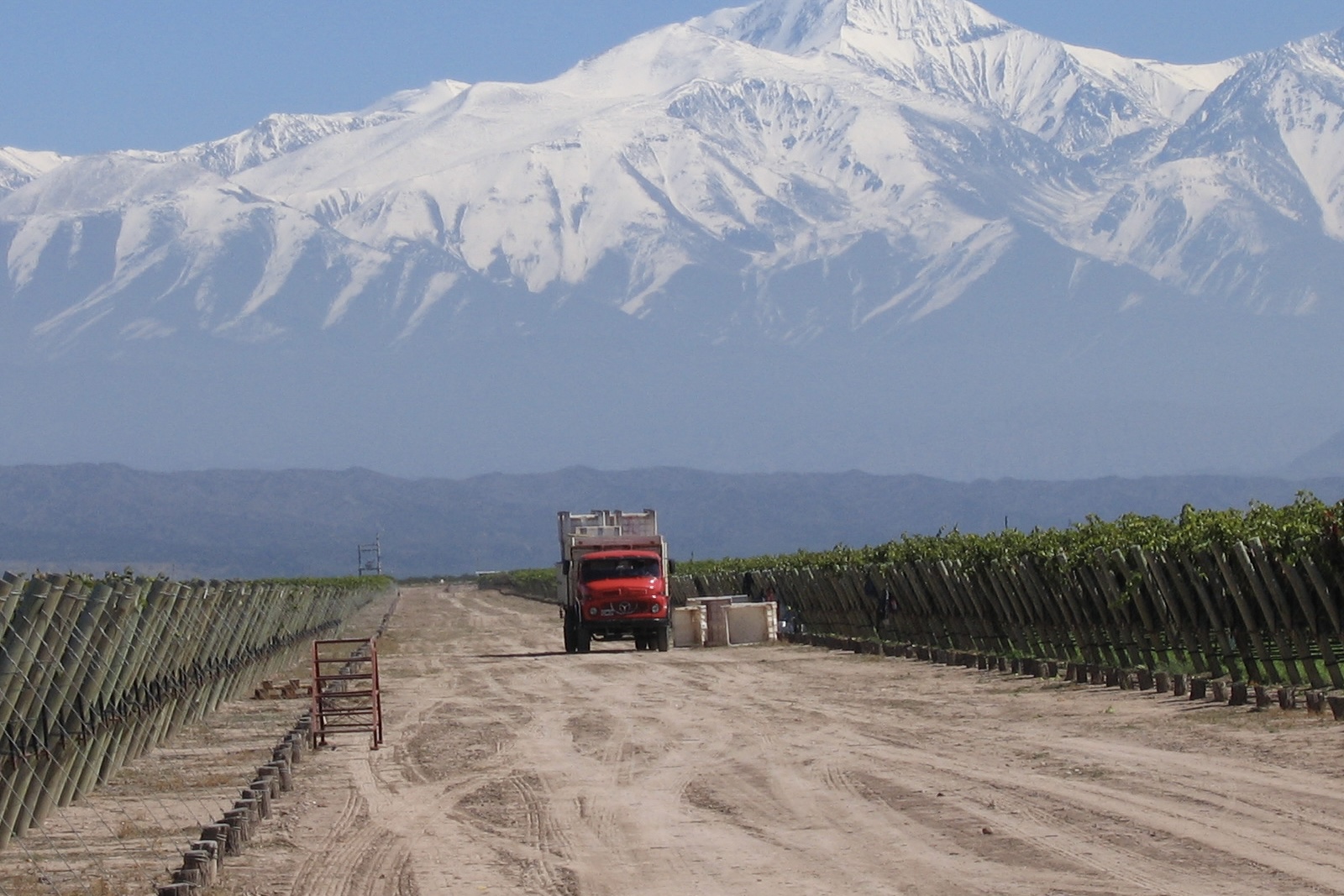
Finally, still within Luján de Cuyo, in Perdriel and Agrelo, the landscape opens up dramatically. Here, expansive vineyards, modern wineries, and a direct, open, and imposing view . Many of these wineries have an architectural style closer to that of the wineries in the Uco Valley, although they are much closer to the city.

A clear axis
The recent winemaking history of Mendoza can be read almost as a journey:
Maipú (train and origin) → Old Route 40 (road and transition) →
Vistalba and Las Compuertas (opening) → Perdriel and Agrelo (modern wineries and open landscape)
All within the same territorial axis.
Uco Valley
Closer to the mountain range, further from the city
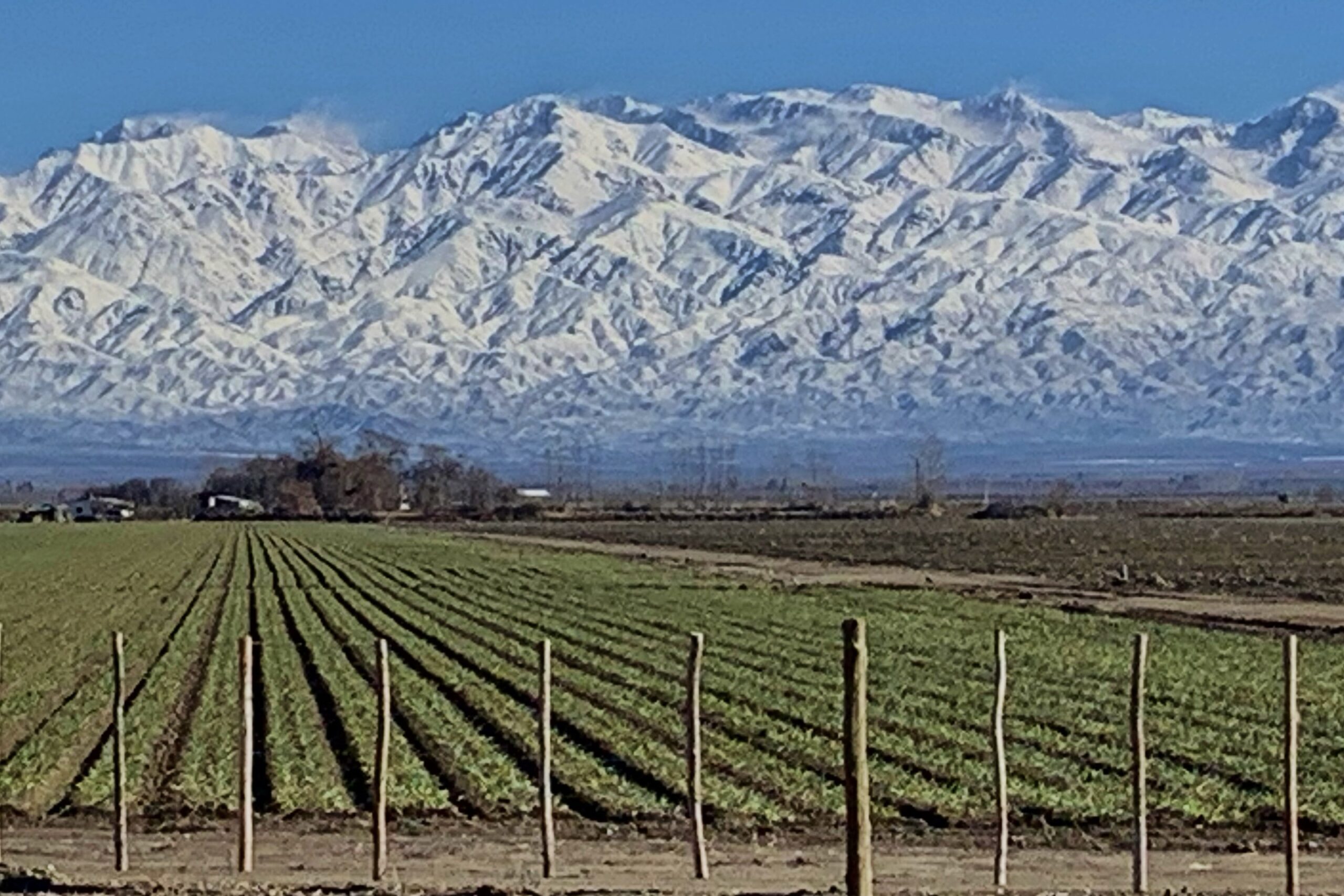
The Uco Valley is located approximately 100–120 km south of the city of Mendoza, so a visit requires a full day. In its northern part, north of the Tunuyán River, areas like Tupungato and Tunuyán have developed rapidly since the 2000s. Here, modern wineries, expressive contemporary architecture, and a more rural, less urban environment predominate. In the Uco Valley, one feels closer to the Andes Mountains, more immersed in the Andean landscape, rather than admiring it from afar.
South of the Tunuyán River
La Consulta, Paraje Altamira and El Cepillo
La Consulta, Paraje Altamira, and El Cepillo belong to the department of San Carlos, south of the Tunuyán River, within the Uco Valley. Not all of San Carlos is wine-producing, but these areas are , and they also have a rich agricultural history.
In La Consulta and Paraje Altamira, there are vineyards over 100 years old, planted over several generations. Many estates—including my family’s—were planted in the 1940s, on land with a prior winemaking tradition. For me, La Consulta and Paraje Altamira are the most emotional part of the Uco Valley: more small-town life, less mass tourism, and a daily connection between wine and people.
Further south appears El Cepillo, the southernmost of the Uco Valley, especially interesting for cold climate varieties, particularly Pinot Noir .
There are fewer wineries, but a very distinct character. This is the Uco Valley at its southern edge.
And further south? San Rafael is part of the Mendoza wine map, but due to its distance it is not practical to visit it from the city of Mendoza or from our hotel on a day trip.
So… how do you choose a wine tour?
It’s not about “which winery has the best wine.”
Today, Mendoza has excellent wine in all its regions .
The key is to choose according to:
- the available time,
- the distances,
- the landscape that attracts you most,
- an interest in history or modern architecture,
- and the pace at which you want to travel.
Before choosing wineries, understanding the different regions is the first step to enjoying Mendoza meaningfully. Read the following post on How to Get Around Between Wineries in Mendoza
-
- Lujan de Cuyo
-
- Valle de Uco
-
- Agrelo