
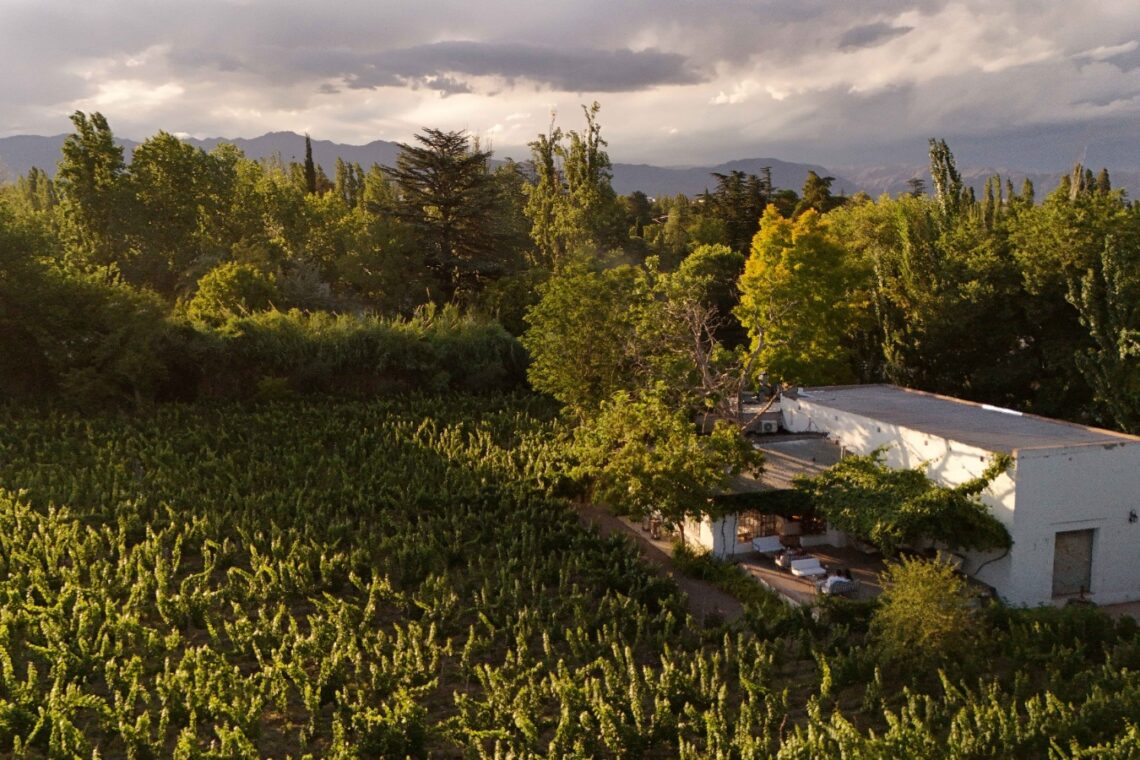
Family Notes Series: Curation in Wine and Hospitality

Curation in wine and hospitality begins with a simple discipline: knowing what does not belong. Quality rarely comes from adding.
It almost always comes from deciding what to leave out.
In wine, that means dropping clusters before they ripen, even though each one could have become more bottles. It can also mean discarding an entire barrel if it doesn’t match the final blend, even after the time and money it took to produce it. Or leaving out techniques, varieties, ideas that would work perfectly well in another context, simply because they don’t belong to this particular wine.
No one raises a glass to what a winemaker chose not to use. And yet that is almost always what determines the final quality.
The same is true of hospitality, even if it’s harder to see.
The temptation to add
It’s easy to confuse hospitality with abundance. More services, more amenities, more choices on the menu, more activities to offer. Each new addition feels, in the moment, like an improvement.
But a place that offers everything ends up with no identity. It starts to resemble every other place that also offers everything. The feeling of being somewhere singular doesn’t come from how much is available — it comes from the fact that everything that is there is there for a reason, not simply because someone thought it would add up to more.
What gets lost without curation
Without curation, everything competes for attention. The room wants to be spectacular, the garden wants to be spectacular, the menu wants to be spectacular, and none of them quite manages it, because the guest’s attention scatters across too many things shouting at once.
A wine blending too many varieties without discipline loses character, even if each variety is excellent on its own. A place offering too many simultaneous experiences loses character, even if each one is, individually, very good.
Curation is what keeps good things from cancelling each other out.
Choosing is also a form of care
Every choice also means leaving something behind.
Reducing a wine’s production doesn’t mean doing less. It means deciding how much you are willing to care for. The same is true of a hotel. Not having a hundred rooms isn’t always a limitation. Sometimes it’s the only way to know every corner, every plant, every detail — and above all, every guest.
You cannot care for an infinite number of things at once.
That’s why, behind every wine and every place with real identity, there’s a long list of invisible decisions: wines that were never made, rooms that were never built, services that were never offered, good ideas that simply didn’t belong there.
Those absences are also part of the work.
To curate is to protect what makes a place unique.
Identity isn’t built from everything we’re capable of doing. It’s built from everything we choose not to do.
That’s why curation goes unnoticed when it’s done well. Like balance, it’s only noticed when it’s missing.
Series: The Philosophy of a Place











0 Comment